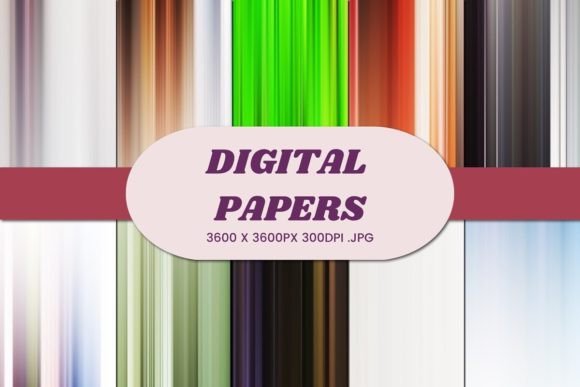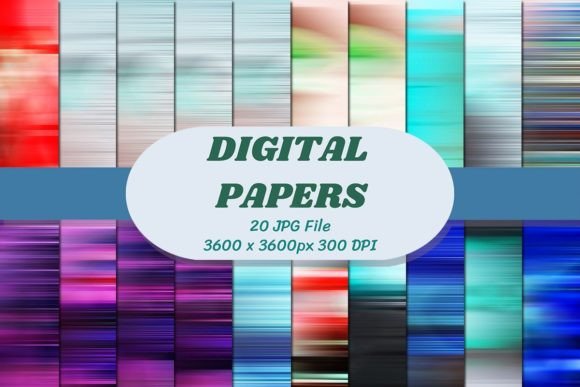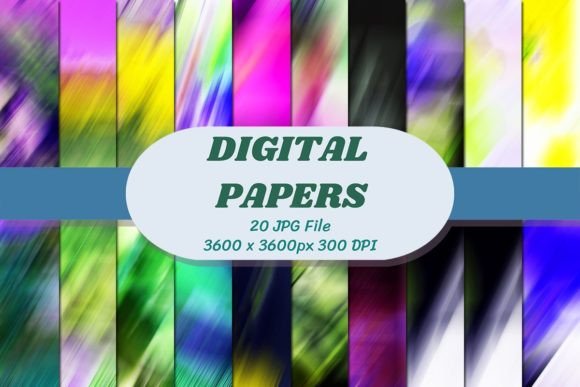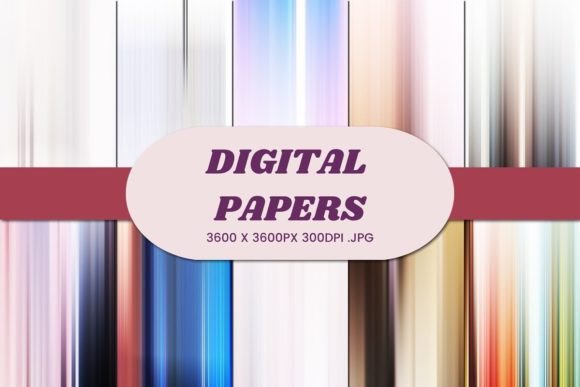
Unlocking Creative Potential with Gradient 13 Background Digital Papers
In the rapidly evolving landscape of digital design and physical manufacturing, the quality of foundational assets often dictates the success of the final product. Gradient 13 Background Digital Papers represents a significant leap forward for creators who demand versatility without compromising on resolution or aesthetic appeal. This collection is not merely a set of images; it is a comprehensive toolkit designed to bridge the gap between digital imagination and tangible reality.
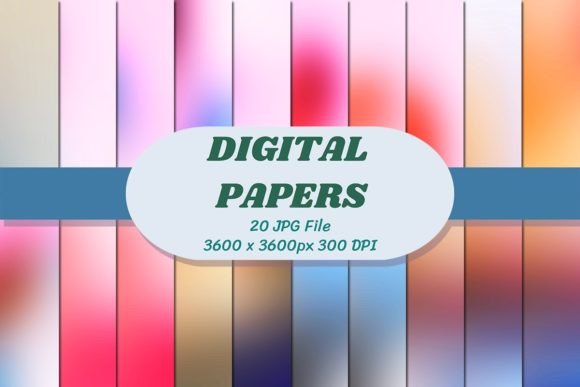
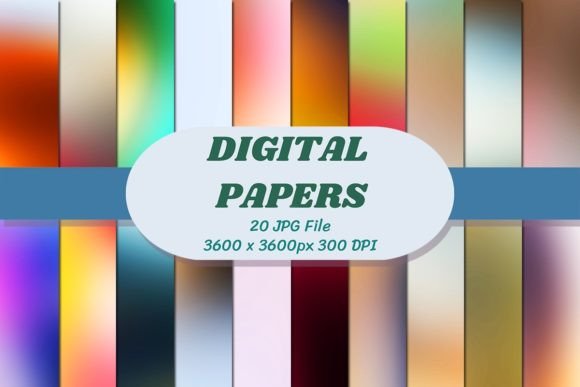
The core value proposition of this resource lies in its adaptability. Whether you are a small business owner looking to brand your merchandise or an educator creating engaging visual aids, the ability to utilize a single asset across multiple mediums is invaluable. The collection comprises twenty distinct JPG files, each meticulously crafted at a high resolution of 3600x3600 pixels. This specific dimension ensures that the gradients remain crisp and smooth, free from pixelation even when scaled up for large-format printing or down for social media avatars.
The Versatility of High-Resolution Gradients
Understanding why resolution matters is the first step in appreciating the utility of these digital papers. A file size of 3600x3600 pixels provides a substantial amount of data, allowing for intricate details in color transitions. Unlike lower-resolution textures that may appear blocky or blurry when printed, these gradients maintain their integrity. This characteristic is particularly crucial for projects involving sublimation, where heat transfers ink onto materials like mugs, tumblers, and textiles.
When designing for physical products, the surface area can vary wildly. A phone case requires a compact, detailed design, while a blanket or a wall wallpaper demands a seamless pattern that covers large areas without repeating awkwardly. The 3600-pixel width offers enough canvas to create complex, non-repeating gradient flows that look professional regardless of the substrate. For those engaged in 3D sublimation tumbler wrap designs, the extra horizontal space allows designers to map colors perfectly around the curvature of the vessel, ensuring no harsh lines interrupt the visual flow.
Applications Across Diverse Industries
The scope of application for these digital assets extends far beyond simple decoration. Professionals in various sectors have found unique ways to integrate these backgrounds into their workflows.
- Retail and Merchandising: Small businesses selling custom apparel can use these gradients as base layers for T-shirts. By overlaying vector logos or typography, the soft transition of the background adds depth that flat colors cannot achieve. Similarly, for stickers and product packaging, the high resolution ensures that the brand identity looks premium under close inspection.
- Event Planning and Stationery: Weddings and corporate events rely heavily on cohesive visual themes. These digital papers serve as perfect backdrops for wedding cards, invitations, and business cards. The subtle shifts in color can evoke emotion and set a tone before a single word is read.
- Digital Content Creation: In the realm of social media, visual consistency is key. Creators can use these files as Wallpaper for mobile devices or as textured backgrounds for social media posts. The high resolution means they look sharp on Retina displays and 4K monitors alike.
- Educational and Research Materials: Educators and researchers often need to present data or concepts visually. Using these gradients in presentations or printed handouts adds a layer of professionalism. They can be used as book covers for self-published guides or as texture overlays in academic posters to break up dense text blocks.
The Mechanics of Sublimation and Print-Ready Design
For hobbyists and professionals alike, the term "printable design" carries specific technical weight. It implies that the file is ready for immediate production without extensive editing. The inclusion of 20 JPG files within this package streamlines the creative process significantly. Instead of spending hours generating noise or searching for stock photos that don't quite match the desired mood, a designer can select a gradient, import it into their software, and begin layering content immediately.
The workflow for using these files in 3D mug wrap or tumbler projects is straightforward but requires attention to detail. Because the files are 3600 pixels wide, they provide ample room for the necessary bleed and safety margins required by most printing machines. When wrapping a cylindrical object, the gradient must account for the seam where the print meets itself. The smooth nature of the Gradient 13 series ensures that any minor alignment issues are less likely to be noticeable compared to hard-edged patterns.
Furthermore, the JPG format, while compressed, is universally compatible with almost all design software, including Adobe Photoshop, Illustrator, Canva, and CorelDRAW. This compatibility removes technical barriers, allowing users to focus on creativity rather than file conversion headaches. For those working on scrapbooks or mixed-media art, these high-quality scans can be printed on matte or glossy paper to serve as journaling spots or decorative borders.
Texture and Depth in Physical Media
One of the most overlooked aspects of digital-to-physical conversion is texture. A flat color on a screen can feel lifeless when transferred to a fabric or ceramic surface. However, gradients introduce the illusion of light and shadow, which interacts beautifully with the texture of the material. On a pillow or a blanket, the way light hits the fabric can enhance the depth of the gradient, making the product feel more luxurious.
This interaction is also vital for craft projects involving vinyl cutting or die-cutting. When a gradient background is used behind a cut-out shape, it creates a halo effect that makes the central element pop. This technique is widely used in window decals and signage to draw the eye without being overwhelming. The 3600x3600 resolution ensures that when these elements are cut out, the edges of the gradient do not show jagged artifacts, maintaining a clean silhouette.
Strategic Implementation for Business Growth
For business owners, investing in high-quality digital assets is an investment in brand perception. The difference between a generic-looking product and a branded one often comes down to the finishing touches. Using a consistent set of backgrounds, such as the Gradient 13 collection, helps establish a visual language. If a brand uses a specific gradient style across their business cards, packaging, and T-shirts, customers begin to associate that visual cue with the company's values.
Consider the scenario of a startup launching a new line of eco-friendly water bottles. By utilizing these gradients for the bottle wrap and matching them with the product packaging box, the unboxing experience becomes immersive. The customer sees a cohesive story from the moment they receive the mailer to the moment they hold the bottle. This level of attention to detail fosters loyalty and encourages word-of-mouth marketing.
Moreover, the efficiency gained from having a pre-made library of 20 high-resolution files cannot be overstated. Time is money in business. Reducing the time spent on graphic design allows teams to focus on marketing, sales, and product development. The ability to quickly generate variations for different seasons or campaigns by simply swapping the background file is a strategic advantage. For instance, a warmer gradient can be used for summer collections, while cooler tones fit winter launches, all derived from the same versatile source.
Adapting to Trends and Customization
The world of design is cyclical, yet trends like minimalism and abstract art continue to dominate. Gradients sit comfortably at the intersection of these movements. They offer the complexity of abstract art with the simplicity of minimalism. This makes them a timeless choice for long-term branding strategies. Unlike trendy illustrations that may date a product quickly, a well-executed gradient remains relevant.
Customization is another key factor. While the 20 files provided are stunning on their own, they are designed to be modified. Users can adjust opacity, blend modes, or overlay additional graphics to create entirely new compositions. For example, adding a subtle texture overlay to the gradient can simulate a vintage paper look, perfect for scrapbooks or rustic-themed invitations. Conversely, applying a glossy filter can make the image suitable for modern tech accessories like phone cases.
The inclusivity of the audience for these tools is remarkable. From the researcher preparing a conference poster to the hobbyist making birthday gifts, the barrier to entry is low, but the ceiling for quality is high. The files support both commercial and personal use, making them a flexible asset for anyone looking to elevate their output.
Technical Specifications and Quality Assurance
The technical specifications of the Gradient 13 Background Digital Papers are tailored to meet industry standards. The 3600x3600 pixel size equates to approximately 12 inches by 12 inches at 300 DPI (dots per inch), which is the gold standard for high-quality printing. This density ensures that fine details are preserved. For larger prints, such as banners or large-scale wallpapers, the file can be scaled further without significant loss of quality, though the maximum dimensions should always be respected to ensure the best outcome.
The JPG format chosen for distribution balances file size with quality. While formats like TIFF or PSD offer uncompressed data, they are often too large for easy sharing and may require specific software to open. JPGs are lightweight enough to be emailed or uploaded to cloud storage platforms while retaining the necessary visual fidelity. This accessibility ensures that the files can be used by a broad range of users, regardless of their technical setup.
Future-Proofing Your Designs
As technology advances, the demand for high-resolution imagery will only increase. With the proliferation of high-definition screens and advanced printing technologies, low-quality assets become obsolete quickly. Investing in assets like the Gradient 13 collection future-proofs your work. You can store these files and use them years later for new projects, confident that they will still meet current standards.
In conclusion, the Gradient 13 Background Digital Papers serve as a foundational element for a vast array of creative endeavors. Their high resolution, diverse applications, and ease of use make them an essential tool for professionals and enthusiasts alike. By integrating these assets into your workflow, you not only save time but also elevate the visual quality of your projects, whether they are digital or physical. The potential for innovation is limitless when you have the right tools to bring your vision to life.